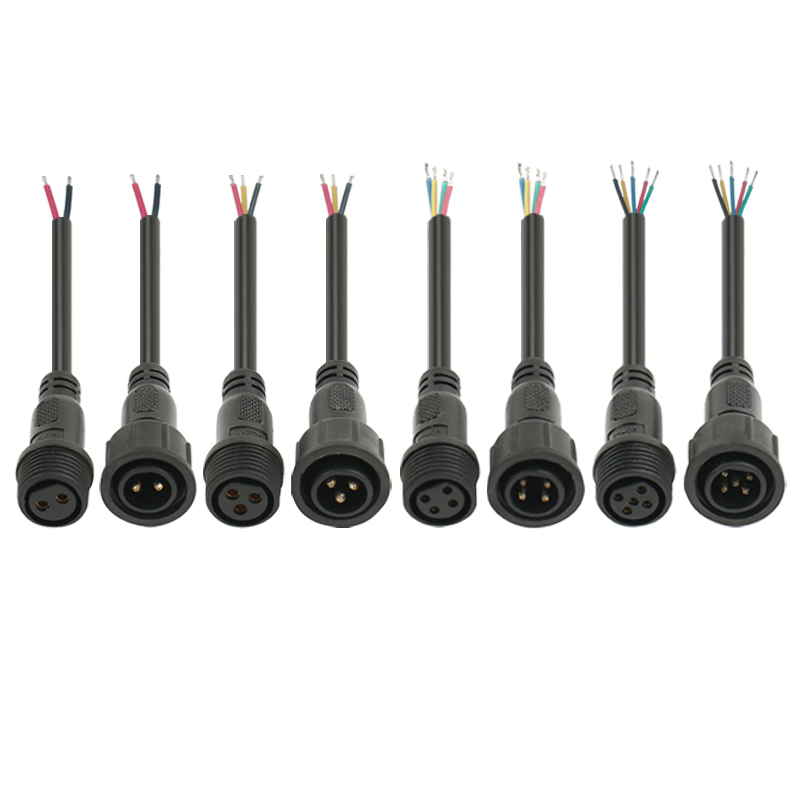
In the realm of industrial connectivity, where equipment operates under extreme temperatures, humidity, vibration, and even submersion, the M16 waterproof connector stands out as a pivotal component. Named after its 16mm thread diameter, this circular connector adheres to rigorous industry standards and delivers uncompromising performance across diverse sectors. From industrial automation to marine equipment, it ensures stable power transmission, signal integrity, and data transfer, making it indispensable for modern engineering projects.
Core Design and Material Advantages
The exceptional durability of M16 waterproof connectors stems from their precision-engineered structure and high-quality materials. The shell, typically crafted from nickel-plated brass, zinc alloy, or PA66 nylon, offers robust mechanical strength, corrosion resistance, and electromagnetic interference (EMI) shielding . For harsh marine or saltwater environments, marine-grade aluminum with a hard anodized coating further enhances corrosion resistance, enabling operation at depths of up to 160 meters .
The internal components are equally sophisticated. Insulators made of PA (polyamide) or PBT materials ensure reliable electrical isolation, while high-performance sealing materials such as epoxy resin, rubber, or dual O-rings create a hermetic seal . This sealing system achieves IP67 or IP68 protection levels—IP67 for complete dustproofing and 30 minutes of submersion at 1 meter, and IP68 for prolonged underwater operation . Gold-plated phosphor bronze contacts minimize contact resistance (≤5 mΩ), boost conductivity, and resist wear, supporting mating cycles of 500 to over 5,000 times depending on the model .
A standout feature is the self-locking mechanism, available in screw-locking or snap-on designs. This ensures a secure connection even under intense vibration (up to 15g at 10-2000Hz) and prevents accidental disconnection, critical for mobile or high-vibration equipment .
Key Specifications and Performance Metrics
M16 waterproof connectors offer versatile configurations to meet varied application needs. They support 2 to 19 pins, including specialized options like RJ45 and fiber optic variants, enabling compatibility with both power and signal transmission . Voltage ratings typically range from 125V to 300V, with current capacities between 2A and 10A, making them suitable for low-voltage signals and medium-power applications .
Operating temperature range is another critical parameter, spanning from -40℃ to +105℃ for most models, allowing seamless performance in freezing cold and high-temperature industrial settings . Advanced variants comply with UL, TUV, and CQC certifications, meeting international safety and environmental standards such as RoHS, which prohibits hazardous substances . For data transmission, select models support Cat5 standards (100 Mbps at 100 MHz), making them suitable for CCTV, WiFi, and GPS systems .
Wide-Ranging Applications Across Industries
The adaptability of M16 waterproof connectors makes them a staple in multiple sectors:
Industrial Automation: They connect PLCs, sensors, actuators, and control devices, forming stable links in production lines and automation systems. Their resistance to vibration and dust ensures uninterrupted operation in factory environments .
Outdoor and Lighting Systems: Ideal for LED lighting, display screens, and solar energy equipment, they withstand rain, sunlight, and temperature fluctuations. The welding-type design provides secure wiring for long-term outdoor use .
Marine and Underwater Equipment: From shipboard electronics to deep-sea sensors, their IP68 rating and corrosion-resistant materials protect against saltwater ingress and pressure .
Communication Infrastructure: Used in GPS, RFID, WLAN, and WiFi antennas, they maintain signal integrity in outdoor base stations and wireless networks, even in harsh weather .
Medical and Testing Equipment: Their high precision and sterile compatibility make them suitable for medical devices and testing instruments, where reliability is paramount .
Installation Best Practices
Proper installation is crucial to maximizing the performance of M16 waterproof connectors. Key steps include: inspecting the connector and sealing ring for damage before installation; stripping cables to the recommended length (typically 15mm with 5mm of exposed copper wire); soldering or crimping wires securely to contacts; aligning the guide groove for blind insertion (where supported); and engaging the self-locking mechanism by compressing or rotating until locked . Regular maintenance, such as cleaning contacts and checking seals, extends service life and ensures consistent performance.
Future Trends and Industry Impact
As industries embrace digital transformation and IoT integration, the demand for high-performance M16 waterproof connectors continues to grow. Manufacturers are innovating to enhance data transmission rates, expand temperature ranges, and develop miniaturized variants without compromising durability. Compliance with evolving environmental standards and the integration of smart features (e.g., condition monitoring) are also shaping future designs.
In essence, M16 waterproof connectors are more than just connectivity components—they are enablers of reliable, safe, and efficient operations in the world’s most challenging environments. Their combination of robust design, versatile performance, and broad compatibility ensures they will remain a cornerstone of industrial and commercial connectivity for years to come.