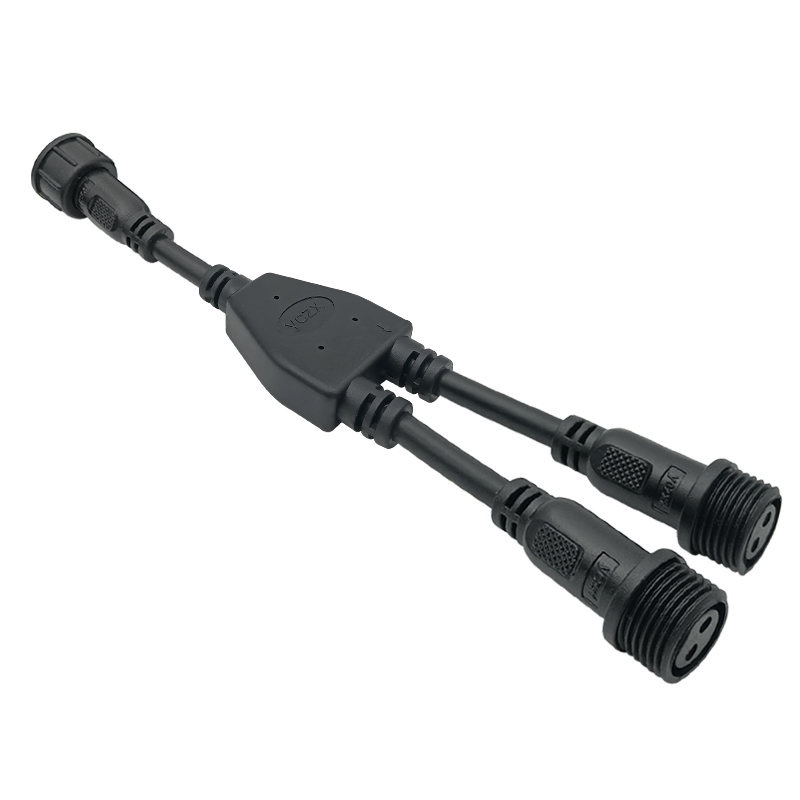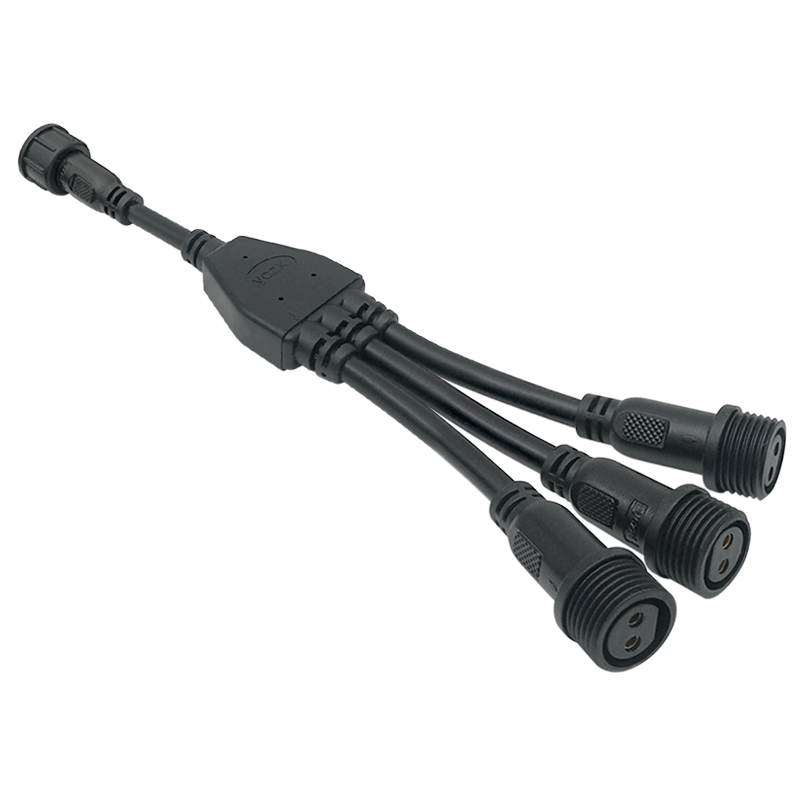


Branching the Network: Heavy-Duty M12 T-Splitters for Agricultural Planters
Modern precision agriculture relies on massive, 24-row smart planters towed behind heavy tractors. Each individual row unit on the planter requires seed-flow sensors, down-force pneumatic controllers, and GPS modules. To connect these hundreds of devices to the tractor's central ECU, agricultural OEMs utilize the ISOBUS (CANbus) protocol, daisy-chaining the network from row to row using M12 T-Splitters.
However, branching a network across a 60-foot folding steel implement in the middle of a muddy field is a brutal mechanical challenge. The T-Splitters are mounted directly to the planter's toolbar, constantly battered by flying gravel, coated in conductive fertilizer mud, and subjected to violent, earth-shattering vibration as the implement drags through the soil. A standard plastic T-Splitter will shatter when hit by a rock or vibrate loose, breaking the CANbus chain and blinding the operator to the planting data. To survive the extreme physics of the modern farm, agricultural OEMs specify the indestructible, solid-metal architecture of PINA GUARD’s Heavy-Duty M12 T-Splitters.
The Kinetic Physics of the Field Network
Daisy-chaining ISOBUS lines on heavy mobile equipment involves a devastating combination of mechanical and diagnostic challenges:
Vibration-Induced Splice Fractures: Inside a cheap T-Splitter, the three ports are connected by a rigid internal circuit board or fragile solder joints. Under the continuous, violent vibration of the planter row units, these internal joints easily fracture, causing intermittent network drops that cripple the automated seeding rate.
Crushing Mechanical Impact: Splitters mounted near folding hinges or hydraulic cylinders face the constant threat of blunt force impact from heavy steel mechanics. A plastic shell will shatter instantly, exposing the CANbus lines to the elements.
Conductive Mud Ingress: Tractors operate in deep mud and driving rain. If a splitter's mechanical seal fails under the bending stress of thick master cables, wet soil bridges the internal pins, short-circuiting the tractor's entire ISOBUS network.
The PINA GUARD "Metal Armor" Topology
To keep the precision planting data flowing, PINA GUARD engineers fully potted, solid-metal M12 T-Splitters that treat extreme kinetic impact and abrasive mud as the baseline standard.
1. Die-Cast Metal ArmorWe strictly reject plastic housings for heavy mobile equipment. The exterior shell of the PINA GUARD T-Splitter is CNC-machined from solid brass or die-cast zinc with heavy-duty plating. This solid metal armor effortlessly deflects flying gravel, survives direct tool impacts, and provides 360-degree EMI shielding against noisy hydraulic solenoids.
2. Vibration-Proof Internal PottingTo protect the critical network splice, the entire internal cavity of the PINA GUARD splitter is permanently potted in an industrial, shock-absorbing epoxy resin. This completely solidifies the internal solder joints, ensuring that no amount of field vibration or tractor bounce can break the electrical circuit.
3. Anti-Vibration High-Torque ThreadsPINA GUARD utilizes precision-machined locking threads on all three ports. Once the operator torques the drop cables into the splitter, the connection is mechanically locked. The robust IP68 elastomer seals compress perfectly, completely locking out corrosive liquid fertilizers and driving rain, ensuring the implement’s digital nervous system remains fully online.